
This post contains affiliate links. I may earn a commission if you purchase through these links, at no additional cost to you.
Introduction
Getting your first affiliate sale can feel like a major milestone.
However, many beginners struggle because they promote products without having a clear strategy.
They may post an affiliate link on social media, wait for clicks, and wonder why nobody buys.
The problem is often not the affiliate product itself.
The product may be useful, but people usually need a reason to trust the recommendation before they make a purchase.
A better approach is to understand your audience, choose relevant products, and create content that helps people make informed decisions.
You can promote affiliate products through:
• Helpful blog posts
• Product reviews
• Comparison articles
• YouTube videos
• Social media content
• Pinterest content
• Tutorials and guides
The right promotion method depends on your niche and the audience you want to reach.
You do not need to use every platform at the same time.
Instead, focus on creating useful content for people who are already interested in the problem your product helps solve.
In this guide, you will learn how to promote affiliate products more effectively and work toward getting your first affiliate sale.
We will cover content creation, free traffic sources, product reviews, social media promotion, building trust, placing affiliate links naturally, and tracking your results.
If you are new to affiliate marketing, you may first want to understand how affiliate marketing works before focusing on product promotion.
Once you understand the basic process, the next step is learning how to connect the right product with the right audience.
Understand Your Audience Before Promoting a Product
Before you promote an affiliate product, take time to understand the people you want to reach.
A product may have excellent features, but that does not mean it is suitable for every audience.
Start by learning about your audience’s:
• Problems
• Goals
• Questions
• Experience level
• Buying concerns
For example, beginners may want simple tools with clear instructions.
More experienced users may care about advanced features, integrations, or long-term value.
The same product can appeal to different people for different reasons.
You should also pay attention to the questions people ask online.
Comments, forums, social media discussions, and search queries can help you understand what your audience wants to know before buying a product.
This information can improve the content you create.
Instead of simply saying that a product is good, you can explain how it may help with a specific problem.
When your recommendation matches the reader’s actual needs, your content becomes more useful.
Understanding your audience also helps you avoid promoting random products.
The right product is not always the one with the highest commission. It is often the one that fits your audience and the problem they are trying to solve.
Choose the Right Promotion Method
There are many ways to promote affiliate products.
However, the best method depends on your audience, niche, and content style.
For example, a blog may work well for detailed reviews, tutorials, and comparison articles.
YouTube can be useful when a product is easier to explain through demonstrations or video tutorials.
Social media may help you reach people through short posts, videos, and discussions.
Pinterest can also be useful for visual content and search-based discovery.
Before choosing a promotion method, think about where your audience already spends time.
You should also consider the type of content you can create consistently.
If you enjoy writing, blog content may be a good fit.
If you are comfortable explaining products on camera, video content may work better.
You do not need to use every platform at once.
Starting with one primary promotion method can make it easier to learn what works.
Once you understand your audience and start seeing results, you can test additional platforms.
The goal is to choose a promotion method that allows you to reach the right people and explain the product clearly.
Create Content That Helps People Make Decisions
People often need more information before they decide whether to buy a product.
Your content can help them understand their options.
Instead of focusing only on the product’s features, explain how the product may help with a specific problem.
You can create content such as:
• Product reviews
• Comparison articles
• Tutorials
• Beginner guides
• How-to content
• Frequently asked questions
For example, a product review can explain who the product may be suitable for, what it does, and what buyers should consider before purchasing.
A comparison article can help readers understand the differences between two or more options.
Tutorials can show people how a product works in a practical situation.
Try to answer the questions your audience may have before they click your affiliate link.
You can also mention important limitations when they are relevant.
This makes your content more balanced and helps readers make better decisions.
The goal is not to pressure someone into buying.
Instead, provide useful information that helps the reader decide whether the product is right for their needs.
When people find your content helpful, they may be more likely to trust your recommendations.
Promote Affiliate Products Through Search Content
Search engines can help you reach people who are already looking for information about a specific problem or product.
For example, someone may search for:
• Best email marketing tools for beginners
• Product A vs Product B
• How to use a specific software tool
• Is a particular product worth buying?
These searches can show that a person is researching a possible solution.
You can create helpful content that answers these questions and naturally recommend a relevant affiliate product when it fits the topic.
Useful search-focused content can include:
• Product reviews
• Comparison articles
• How-to guides
• Tutorials
• Best-of lists
• Beginner guides
Try to understand what a person wants to know before creating the content.
Someone searching for a product review may want an honest evaluation.
Someone searching for a tutorial may need help solving a specific problem.
By matching your content with the searcher’s intent, you can make your article more useful.
Avoid creating content only to place an affiliate link.
Instead, answer the question clearly and provide a relevant recommendation when it genuinely helps the reader.
Use Social Media to Reach Potential Buyers
Social media can help you reach people who are interested in a specific topic, problem, or type of product.
You can use platforms such as:
• Facebook
• Instagram
• YouTube
• TikTok
• Pinterest
The best platform depends on your audience and the type of content you create.
For example, short videos may work well for quick tips and product demonstrations.
Pinterest can help people discover visual content and helpful resources.
Facebook groups can be useful for discussions, questions, and community-based content.
Focus on helping people instead of posting affiliate links repeatedly.
You can share:
• Helpful tips
• Short tutorials
• Product information
• Problem-solving content
• Personal experiences
When a product is relevant to the discussion, you can include a recommendation according to the platform’s rules.
Avoid joining a community and immediately posting promotional links.
People are more likely to pay attention to your recommendations when you have already contributed useful information.
You should also follow each platform’s rules about affiliate promotions and commercial content.
Build Trust Before Asking for a Sale
People are more likely to consider a recommendation when they trust the information behind it.
That trust usually develops over time.
Instead of promoting a product in every piece of content, focus on helping your audience first.
You can build trust by:
• Sharing useful information
• Explaining products honestly
• Answering common questions
• Mentioning important limitations
• Avoiding unrealistic promises
• Recommending products that fit the topic
For example, if you are reviewing a product, explain what it does and who may benefit from it.
You can also mention situations where another option may be more suitable.
This type of balanced information can make your recommendation feel more genuine.
Your audience does not need to agree with every recommendation.
However, they should feel that your content is created to help them make a better decision.
Over time, consistent and useful content can help you build credibility.
Once people trust your information, they may be more willing to explore the products and services you recommend.
Add Affiliate Links Naturally
Affiliate links should fit naturally into the content you create.
Do not add links simply because you want more clicks.
Instead, place a link where it can help the reader learn more about a product or solution.
For example, you can add an affiliate link:
• After explaining a product
• Inside a relevant product review
• Within a comparison article
• After mentioning a useful tool
• Near a clear call to action
The link should make sense in the context of the surrounding content.
You should also use clear anchor text when possible.
For example, phrases such as “learn more about this tool” or “check the product details” can be more natural than using a random link.
Avoid placing several affiliate links close together.
Too many links can make your content feel overly promotional.
You should also disclose your affiliate relationship when required.
A simple disclosure helps readers understand that you may earn a commission if they make a purchase through your link.
The goal is to make the recommendation useful and transparent.
When an affiliate link naturally supports the information you are sharing, readers can decide for themselves whether they want to click and learn more.
Create a Simple Promotion Strategy
Promoting affiliate products becomes easier when you have a simple plan to follow.
Start by choosing one product that fits your audience and your niche.
Then, decide how you want to introduce it to potential buyers.
For example, you could:
• Create a helpful blog post
• Publish a product review
• Make a comparison article
• Create a tutorial
• Share useful social media content
Try to connect your content so that people can learn more about the topic before seeing your recommendation.
For example, a simple promotion process could look like this:
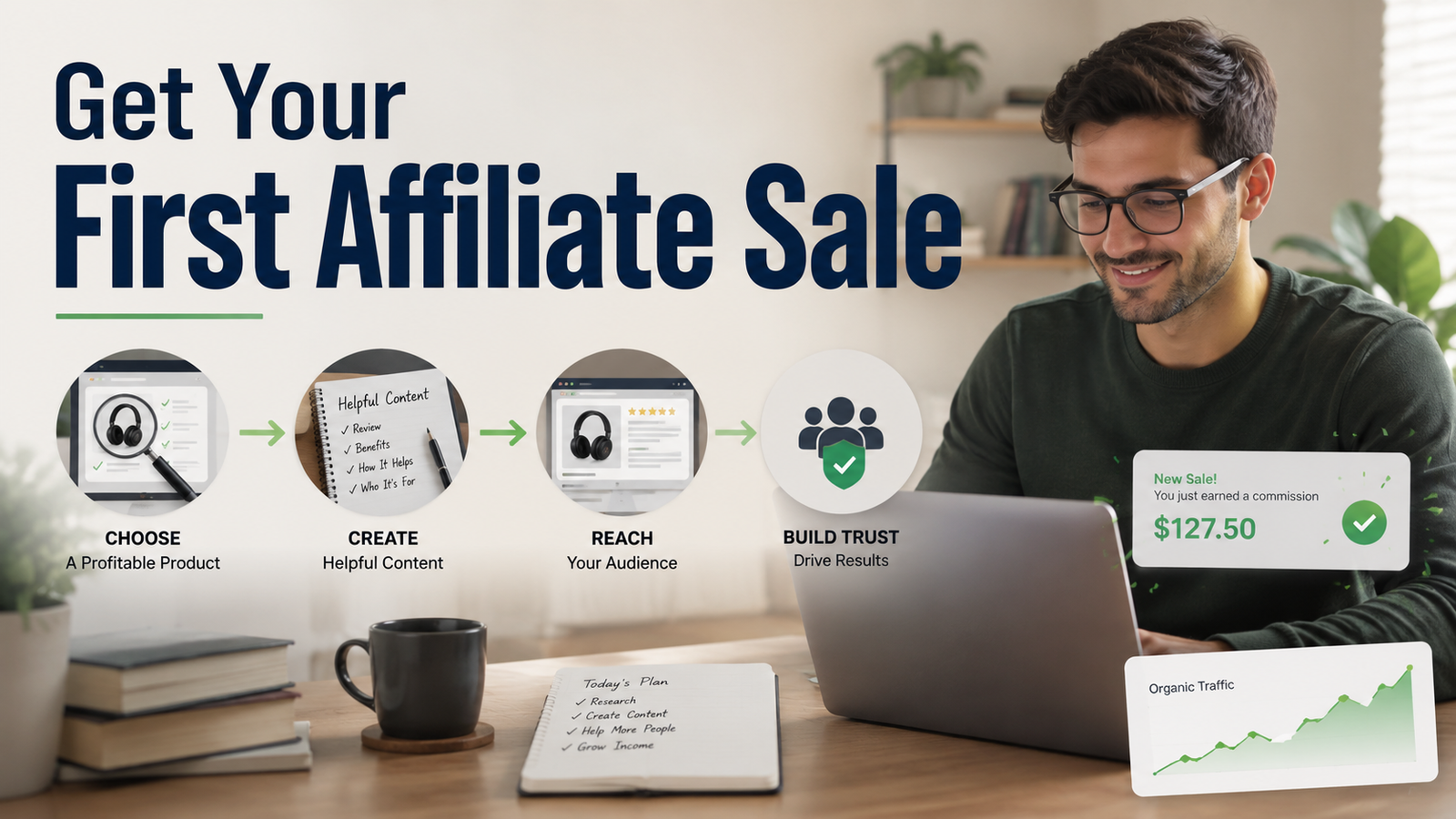
Understand a problem → Create helpful content → Explain a possible solution → Recommend a relevant product
You can then track how people respond to your content.
Pay attention to:
• Content views
• Website visits
• Affiliate link clicks
• Engagement
• Conversions
Do not change your entire strategy after one post.
Instead, give your content time to attract attention and look for patterns in your results.
A simple strategy is often easier to maintain than trying to promote several products across every platform at the same time.
Track Clicks and Improve Your Approach
Tracking your results can help you understand which parts of your affiliate promotion strategy are working.
Depending on the platform and affiliate program you use, you may be able to track:
• Affiliate link clicks
• Website traffic
• Content views
• Conversions
• Commission earnings
Start by looking at which content attracts the most attention.
For example, one article may receive many visitors but very few affiliate clicks.
Another article may receive fewer visitors but generate more clicks.
This information can help you understand how your audience responds to different topics and recommendations.
You can also test small changes to your content.
Try improving:
• Headlines
• Product explanations
• Calls to action
• Link placement
• Content topics
Avoid changing too many things at the same time.
If you change everything together, it becomes difficult to understand what improved your results.
Instead, make one change, give it some time, and compare the results.
Over time, this process can help you create better content and improve your affiliate promotion strategy.
Common Affiliate Promotion Mistakes
Beginners can make several mistakes when promoting affiliate products.
One common mistake is promoting products that do not match the audience.
A product may offer a high commission, but that does not mean it is the right recommendation.
Another mistake is focusing only on the affiliate link.
Your content should provide useful information before asking people to click.
Some beginners also promote products on every platform at once.
This can make it difficult to create consistent content and understand which strategy is working.
Other mistakes include:
• Making unrealistic income claims
• Hiding the affiliate relationship
• Using too many affiliate links
• Ignoring platform rules
• Giving up after a short period
• Failing to track results
You should also avoid changing your entire strategy based on one unsuccessful post.
Affiliate promotion often requires testing and learning.
A better approach is to identify what is not working, make a small improvement, and continue testing.
By avoiding these common mistakes, you can create a more consistent and trustworthy approach to promoting affiliate products.
How Long Does It Take to Get Your First Affiliate Sale?
There is no fixed timeline for getting your first affiliate sale.
Some beginners may generate a sale within a few weeks, while others may need several months to build traffic and trust.
Your timeline can depend on:
• Your niche
• The products you promote
• Your traffic source
• The quality of your content
• Your audience
• Your consistency
For example, a person with an existing audience may get results faster than someone starting from zero.
However, having an audience does not guarantee a sale.
The product still needs to match the audience’s needs, and the content should help people make an informed decision.
If you are starting from scratch, focus on building useful content instead of setting an unrealistic deadline for your first commission.
Create content consistently, learn from your results, and improve your promotion strategy over time.
You may receive clicks before you get a sale.
You may also need to test different products, content topics, and traffic sources before finding an approach that works well for your audience.
The first sale can take time, but the process of learning from your efforts can help you build a stronger affiliate marketing strategy.
How This Guide Connects With Our Affiliate Marketing Guides
Promoting affiliate products becomes easier when you understand the complete affiliate marketing process.
If you are new to affiliate marketing, our guide on how to start affiliate marketing explains the basic process and shows how the model works.
After understanding the basics, you can explore the best affiliate programs for beginners in 2026 to find platforms and programs that may fit your niche.
The next step is choosing products that are relevant to your audience. Our guide on how to choose affiliate products to promote explains what to consider before recommending a product.
If you are starting with a limited budget, our guide on how to start affiliate marketing with no money explains how you can use free platforms, content, and organic traffic to begin.
Together, these guides follow a simple path:
Understand affiliate marketing → Find suitable programs → Choose relevant products → Start with limited resources → Promote products effectively
Frequently Asked Questions
How can I promote affiliate products as a beginner?
You can promote affiliate products through helpful blog posts, product reviews, comparison articles, tutorials, videos, social media content, and other suitable platforms. Start with one or two methods and focus on creating useful content for a specific audience.
What is the best way to promote affiliate products?
There is no single best method for everyone. The right approach depends on your niche, audience, content skills, and traffic source. Helpful content that answers real questions can help you reach people who are already interested in a particular problem or solution.
Can I promote affiliate products without a website?
Yes. You can use platforms such as YouTube, Pinterest, Facebook, Instagram, and other suitable content platforms. However, always follow the rules of each platform before sharing affiliate links or promotional content.
How do I get my first affiliate sale?
Start by choosing a relevant product and creating content that helps your audience understand its value. Build trust, answer common questions, use affiliate links naturally, and focus on reaching people who may genuinely need the product.
How many affiliate products should I promote?
There is no fixed number. Beginners may find it easier to focus on a small number of relevant products instead of promoting many unrelated offers. Choose products that fit your niche and provide value to your audience.
How long does it take to get the first affiliate sale?
There is no fixed timeline. Some people may get a sale within a few weeks, while others may need several months. Results depend on factors such as your niche, content, traffic source, audience, consistency, and the products you promote.
Should I promote products with the highest commission?
Not necessarily. A high commission does not automatically make a product a good recommendation. Relevance, product quality, audience needs, and customer value should also be considered before promoting an offer.
Do I need to use paid advertising to promote affiliate products?
No. You can start with free traffic sources such as search content, social media, video platforms, and Pinterest. Paid advertising is optional and may be considered later when you understand your audience and promotion strategy.
Final Thoughts
Your first affiliate sale may take time, but you can improve your chances by using a clear promotion strategy.
Start by understanding your audience and choosing products that match their needs.
Then, create helpful content that answers questions and helps people make informed decisions.
You can promote affiliate products through:
• Blog posts
• Product reviews
• Comparison articles
• Tutorials
• Social media content
• Videos
You do not need to use every platform at once.
Choose a promotion method that suits your audience and your content style.
Build trust by providing honest information and avoiding unrealistic promises.
Also, track your results so you can understand which content attracts visitors, clicks, and conversions.
Getting your first sale may require testing different products, topics, and promotion methods.
Do not expect every piece of content to generate immediate results.
Instead, focus on creating useful content consistently and improving your approach over time.
A simple process can help:
Understand your audience → Choose a relevant product → Create useful content → Promote it through the right channel → Track your results → Improve your strategy
Affiliate marketing is not about placing links everywhere and waiting for people to buy.
The goal is to connect the right product with the right audience at the right time.
When your content helps people solve a problem or make a better decision, your affiliate recommendations can become more useful and natural.
Really impressed with the game variety here. I had a great run last weekend and the support team was super helpful. Highly recommend 888win58com to anyone looking for action.
[3775]tkpk অফিসিয়াল লগইন | সেরা অনলাইন স্লট গেম ও বোনাস,tkpk অ্যাপ ডাউনলোড করে সেরা অনলাইন স্লট গেম উপভোগ করুন। বিকাশ দিয়ে সহজে ডিপোজিট এবং আকর্ষণীয় বোনাস পাওয়ার নিয়ম জানতে আজই জয়েন করুন। visit: tkpk
[5520]gtabet Official Login – Pinakamabilis na GCash Casino sa PH,Gamitin ang gtabet official login para sa legit online casino ph. I-download na ang app at alamin kung paano maglaro ng slots gamit ang GCash. Mag-sign up na! visit: gtabet
Really impressed with the variety of betting options. There is something for everyone here. I am sticking with 87a777bet
Quick withdrawals are what I care about most and this place delivers. No long waiting times or weird requirements. I trust iddtg288 for my gaming sessions.
Really impressed with the loading speed and the overall design. It is very intuitive even for beginners. My go-to is pkkk77
Really loving the atmosphere and the variety of options available. It feels secure and the wins are actually hitting. pkwinpkr11 is my new go-to place.
Best VIP treatment I have ever received on a platform. The perks are amazing and the payouts are lightning fast. 188cokvip is simply the best.
Really impressed with the game variety. Everything loads quickly and the graphics are top notch. br52betwin is definitely my new go-to spot.
Love the atmosphere here. It feels like a real casino from the comfort of my own home. Everything is legit and transparent. Check out br3fcassino for some great action.
Solid platform with a great selection of live dealer games. I feel like I have a better chance of winning here than anywhere else. Check br80win8.
The game variety here is just amazing. I spent hours exploring different options and everything works perfectly on my phone. Love the vibe at br27g!
Super friendly community and great promotions for new members. I feel lucky every time I log in here. Visit 85ph777 for some amazing rewards.
The slot selection here is top notch and the graphics are crisp. I love how stable the connection is even during peak hours. Check out buy138slotlogin for the best slots.
Honestly, this is one of the most stable sites I have used recently. The loading speed is great and the interface is very friendly for beginners. Highly recommend phjljl7777 for anyone looking for a smooth experience!
I’ve been looking for a reliable way to access my account and this site is perfect. Everything loads fast and the login process is smooth. Highly recommend ta903login for a hassle-free experience!
I love how the site looks and feels. It makes the whole gambling experience much more enjoyable. Definitely spending more time on okjilicasino
Really appreciate how transparent the bonuses are here. No hidden traps, just a straight up great gaming experience. I am sticking with vnbet168169.
Finally a platform that understands what Asian players need. The login is secure and the customer support is actually helpful. Great job plus777asialogin.
Best slot experience I have had in a long time. The variety of games is impressive and the mobile version works perfectly. Go to ssbet77slot now.